

A bad finance hire is not a minor setback. It is a compliance risk, a reporting failure in progress, and a cost that compounds long after the person is gone.
Most hiring managers know this. What they underestimate is how hard the search has actually become.
The Talent Pool Is Thin. And Getting Thinner
Finance and accounting roles sit among the most difficult to fill in the U.S. right now. The unemployment rate for accountants and auditors was just 1.0% in May 2026, against a national rate of 4.3%, according to the U.S. Bureau of Labor Statistics Job Openings and Labor Turnover Survey.
The CPA pipeline is contracting, too. The number of people sitting for the CPA exam has fallen more than 30% since 2016. At the same time, the BLS projects over 120,000 accounting and auditing openings each year, most of which are driven by retirements and career exits.
In 2025, U.S. employers posted more than 819,000 finance and accounting jobs. That is demand. What is missing is supply.
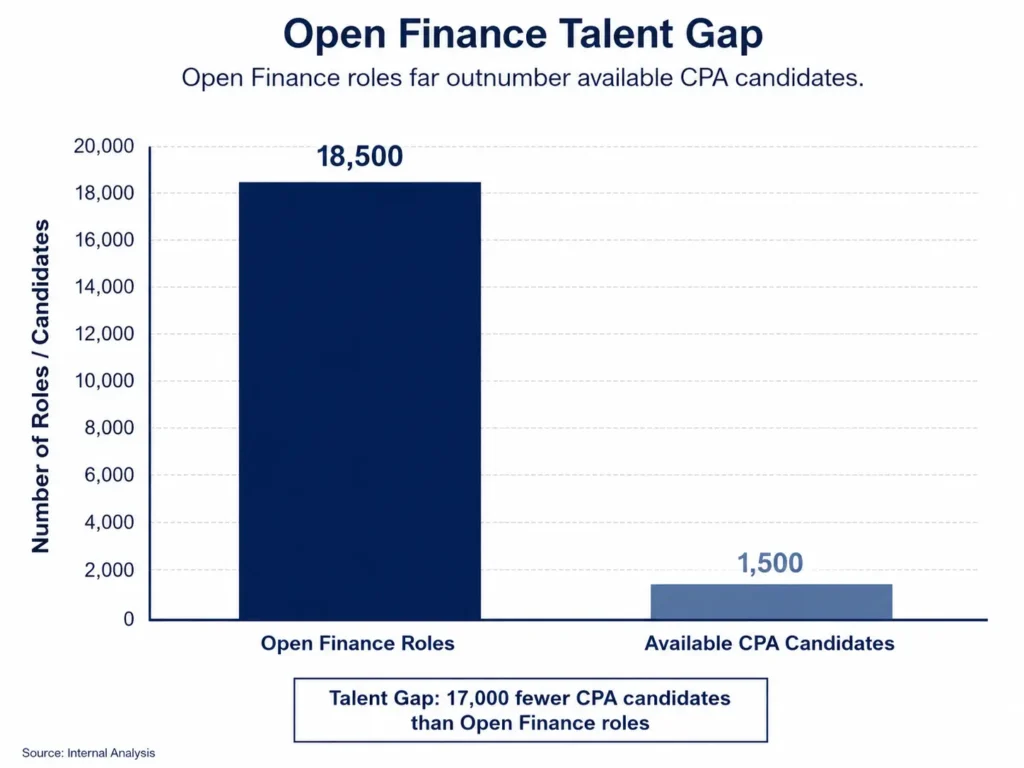
According to KPMG’s analysis of the accounting talent shortage, the controller role has been the hardest position to recruit for three consecutive years. This is not a hiring cycle. It is a structural gap.
What Breaks Down Without the Right Recruiter
General recruiters struggle in finance. The credentials are specialized. The regulatory exposure matters. A candidate who looks strong on paper may lack the specific experience a CFO will question within 90 days.
Robert Half’s research, which we mentioned earlier, shows that 75% of finance leaders say skills shortages have caused project delays in the past year. More than 60% report canceled initiatives as a direct result.
The cost of a vacancy is rarely counted correctly. Delayed close cycles, stretched team members, and missed reporting deadlines add up fast.
What a Good Finance Recruiter Actually Does

- Speaks the language. A finance recruiter knows the difference between a staff accountant and a senior accountant. They understand what CPA licensure means in practice. They can assess whether a candidate’s GAAP or IFRS experience fits the role, before a hiring manager sees the resume.
- Builds the pipeline before the need exists. The best finance candidates are rarely looking. A recruiter with a cultivated network reaches passive candidates before a role is even posted.
- Moves with urgency. SHRM’s 2025 recruiting benchmarking data show that the average time-to-fill is around six weeks across industries. In finance, CPA-required roles routinely take 60 to 73 days. Slow processes lose candidates to competing offers.
The Bottom Line
Finance hiring is not a volume game. Posting a job description and reviewing resumes work in markets with a surplus of talent. This one does not have surplus talent.
The organizations getting finance hires right treat it as a search process, not an intake process. They work with recruiters who understand the terrain, move before a vacancy shows up, and qualify candidates against business-specific criteria, not just job descriptions.
The stakes are real. So should the process be.