
In a single major metro market, over 500 server job postings compete for the same candidates on any given day. A candidate reading each one at two minutes per ad would spend more than 16 hours getting through them all.
They do not read each one. They skim, look for a reason to stop scrolling, and move on in seconds. Most restaurant job ads give them no reason to stop.
What Candidates Actually See

The typical server posting looks like this: a restaurant name, a generic title, a bulleted list of duties, a wage range somewhere between “competitive” and unhelpfully vague, and an instruction to send a resume.
Servers already know the duties. They know what serving involves. The duty list is not information. It is filler. What a candidate does not know from that ad is why your restaurant is worth the application over the 499 others they are scanning past.
According to the National Restaurant Association, 32% of restaurant operators now report being understaffed, down significantly from 78% in 2021. Conditions have improved. Competition for the most reliable, experienced candidates has not. In a market where a skilled server has real options, the job ad is your first pitch. Most pitches are indistinguishable from each other.
What Makes a Server Ad Worth Reading
A server candidate scanning a posting needs four things before they decide to apply.
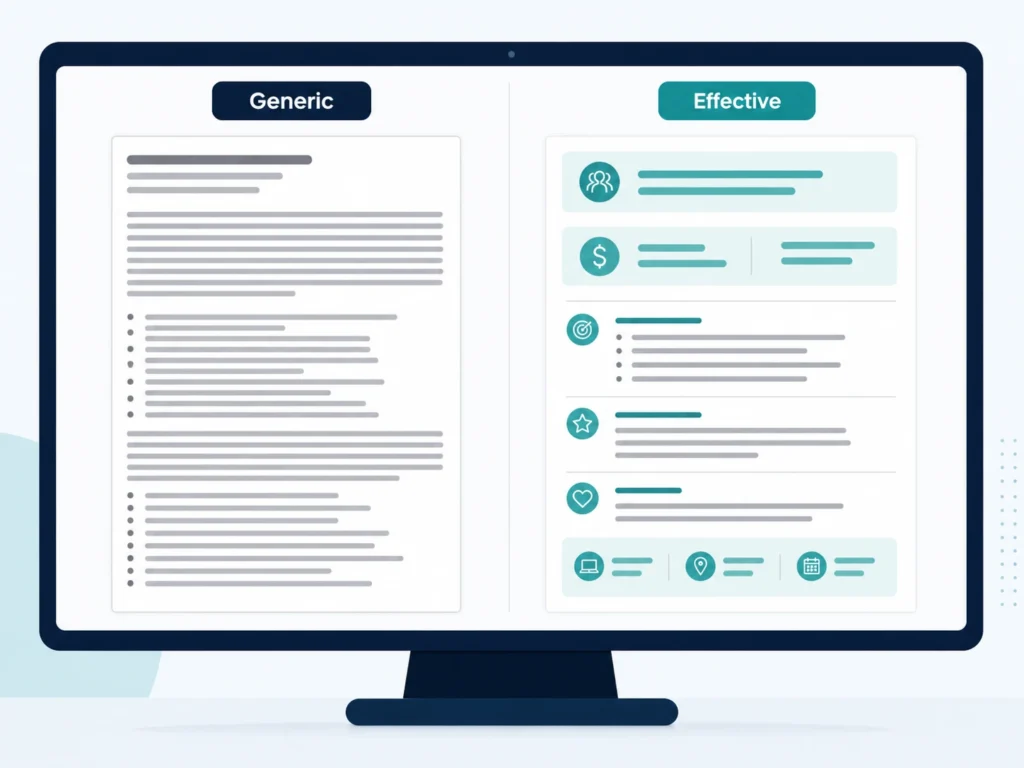
- Real earnings information. Servers negotiate on actual take-home pay, which means tips. Give an honest estimate of what experienced staff earn in a typical week, including tips. A concrete number range signals that you understand the role. “Competitive pay” signals that you don’t.
- Schedule specifics. Lunch only? Dinner only? Split shifts? Weekend availability required, or optional? Candidates with childcare, second jobs, or classes make fast decisions based on scheduling reality. Give them what they need to self-qualify early.
- A clear sense of the environment. Fast-casual high-volume? Fine dining with full service? A neighborhood spot with a regular crowd? These details cost nothing to include and they attract the specific kind of person who thrives in that setting. Candidates self-select, and that is a good thing.
- A reason to choose you. Staff meals, consistent scheduling, a management team that promotes from within, a team that has stayed for years: any one of these is more compelling than a duty list. According to Talent Trends research, pay transparency and flexible scheduling are the two most effective recruiting signals HR professionals use. Both translate directly to server hiring. Lead with them.
What to Cut
Remove the duty list. Cut “must be a team player.” Delete anything a candidate already knows is part of the job.
Every line that describes the obvious is a line where a candidate stops reading. The opening paragraph of the ad should answer one question: what is it like to work here? The rest provides logistical detail that supports that answer.
A long list of requirements discourages borderline candidates who might be your best hire. Experienced servers know whether they are qualified. You do not need the list. You need the pitch.
The Reframe
Indeed’s food and beverage hiring research confirms that postings highlighting specific benefits, clear working conditions, and workplace environment consistently outperform generic listings on application rates.
Write your server ad the way your best current server would describe the job to a friend, direct, specific, and honest about what makes it worth showing up for.
A job ad is marketing. The product is the job. The audience is someone who has options. Write it like all three of those things are true, because they are.