

A CFO hire is not a recruiting exercise. It is a decision that shapes how an organization plans, reports, communicates with investors, and responds to financial pressure.
When it goes wrong, the cost is not just a bad hire. It is a leadership gap at the exact point where the business is most exposed.
Why CFO Searches Take Longer Than You Expect
The CFO role has expanded. Organizations now expect their CFO to drive strategy, manage board relationships, lead technology adoption, and own cross-functional transformation in addition to running financial operations.
That combination is rare. And the market reflects it.
According to a 2025 McKinsey analysis of executive talent markets, it now takes firms 20% longer to find CFOs than it did before 2023. Most searches run 60 to 90 days at a minimum. More complex mandates stretch to four to six months.
The problem is not a lack of finance executives. It is that organizations want a CFO with sector-specific depth, operational breadth, board-level credibility, and technology fluency, and that candidate is rarely on the market.
The Stages of a Search That Works
A proper CFO search is not a sequence of interviews. It has structure, and the structure matters.
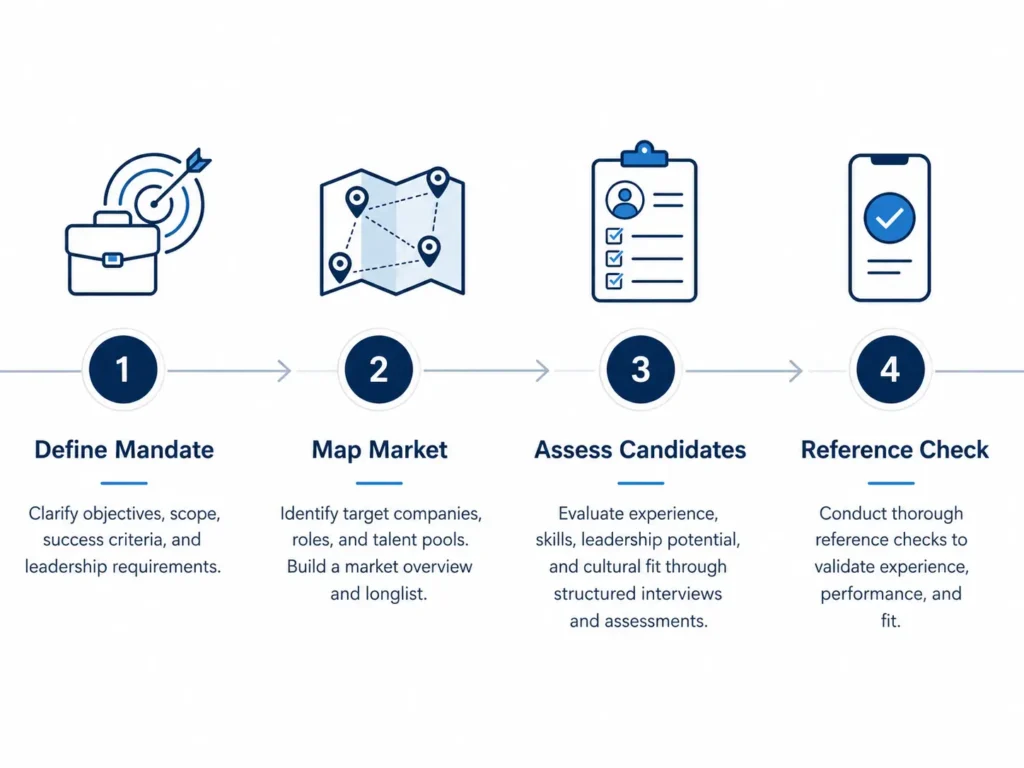
- Stage 1: Mandate definition. Before any outreach begins, the search needs to answer one question: what kind of CFO does this business actually need? A builder, an operator, a transformation lead, or a caretaker requires a different profile. Getting this wrong early wastes weeks and produces a short list that doesn’t fit.
- Stage 2: Market mapping. The best CFO candidates are not looking. They are running finance functions elsewhere. Effective search means systematically identifying, building a long list of relevant executives, and making direct, discreet approaches before a job description appears publicly.
- Stage 3: Structured assessment. Technical finance competency is a baseline. What separates CFO candidates is their ability to translate financial data into decisions, influence peers, and build trust with boards. Executive-level assessment evaluates both dimensions, not just credentials.
- Stage 4: Reference diligence. CFO references should go beyond a checklist. Board members, former CEOs, and direct reports provide different signals. Each matters.
Retained vs. Contingency: Why the Model Matters Here
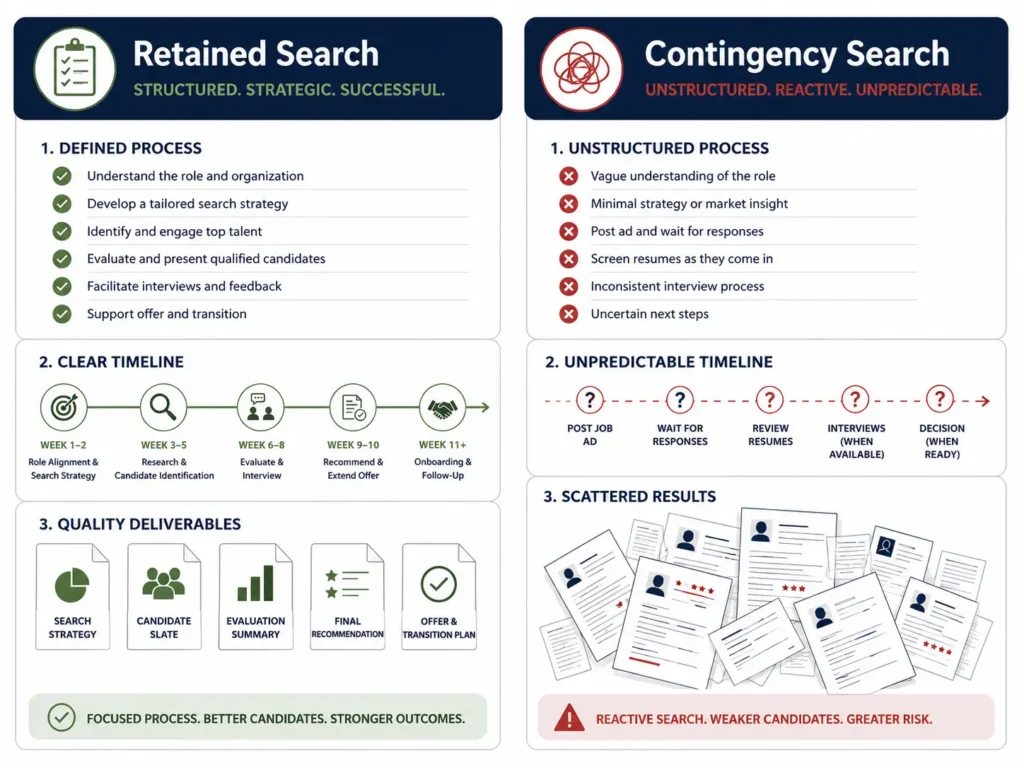
For a CFO search, a retained search is almost always the right structure.
A retained engagement means the firm commits dedicated resources from day one. It means accountability, confidentiality, and a structured process rather than a race to submit resumes.
Contingency arrangements where the firm earns a fee only on placement create the wrong incentives for an executive hire. Speed replaces diligence. Volume replaces fit.
KPMG’s analysis of the accounting leadership talent shortage shows the controller role, directly below the CFO, has been the hardest finance position to fill for three consecutive years. The CFO market sits in the same structural scarcity.
What Good Looks Like
A well-run CFO search produces a short, qualified slate of typically three to five candidates, within a defined window. Each candidate is evaluated against the same criteria. The process protects confidentiality, respects candidates’ schedules, and conducts full due diligence before an offer is made.
According to Deloitte’s 2025 Global Human Capital Trends report, organizations that treat talent acquisition as systematic, relationship-driven architecture achieve measurably better retention outcomes. For a CFO hire where a failed placement can disrupt an entire leadership team, that architecture matters most.
The search is not the most expensive part of a CFO hire. Getting it wrong is.