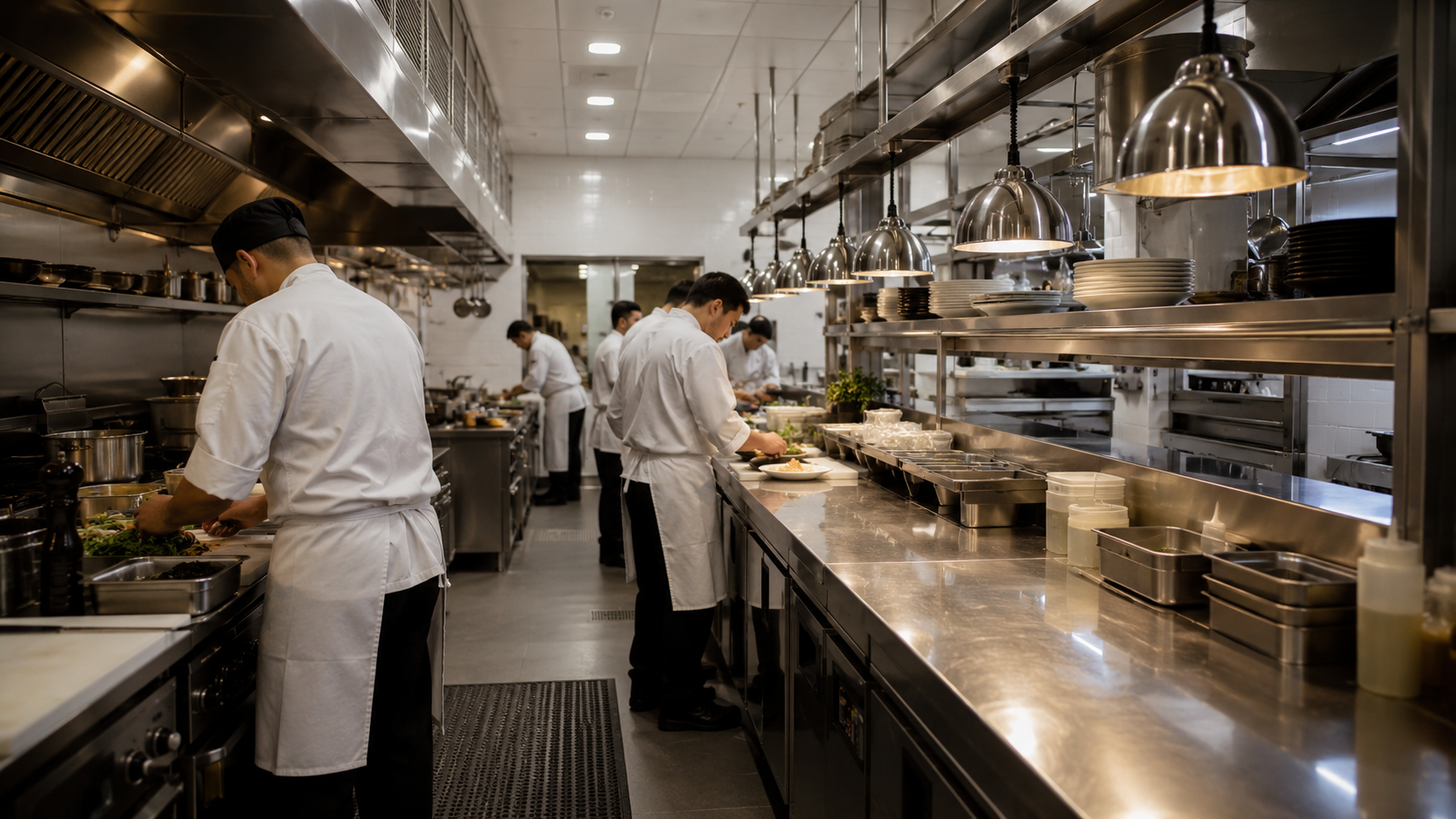

Seasonal hospitality businesses do not have a fixed headcount need. They have an occupancy curve.
The American Hotel and Lodging Association reports that 65% of surveyed hotels experience ongoing staffing shortages, with properties facing occupancy swings of 40 to 60 percent or more between peak and off-peak periods. Tourist-area restaurants often need to rebuild 60 to 80 percent of their team for each season. This is not a staffing gap. It is a structural operating reality that requires a structural response.
Most operators treat seasonal hiring as a reactive event. Bookings spike, jobs get posted in a rush, and new hires are still in training during the busiest service weeks of the year. The result is a workforce that is never quite ready when it is needed most.
The Three-Layer Model

Seasonal workforce planning works best as a three-layer structure, and each layer has a different job.
- The permanent core carries institutional knowledge and consistency year-round. These are the people who know the menus, the systems, the regulars, and the property’s standards. They should be cross-trained across at least two functions so they can flex when volume spikes.
- The seasonal layer expands and contracts around the core on a defined timeline. According to SHRM’s seasonal workforce planning guidance, top-performing operators begin recruiting 12 to 16 weeks before their first peak week. By the time demand arrives, the seasonal layer is trained and integrated, not still in orientation.
- The on-demand layer handles the unpredictable: an unexpected large booking, a staff illness, a local event that extends beyond forecast. Staffing agency relationships and pre-vetted flex workers live here.
The Returnee Advantage
The most efficient hire in seasonal staffing is someone who already worked for you last season.
Former seasonal staff who performed well need minimal onboarding, integrate faster, and have already demonstrated they can operate in your specific environment. SHRM’s retention research consistently identifies rehires and internal referrals as the lowest-cost, highest-retention candidates an operator can recruit. They cost less to bring back than to replace with someone new, even after accounting for a modest pay premiu
Building a returnee program is operationally simple: track performance during each season, exit-interview your best performers, and reach out directly in January or February, well before they have committed to another property. The training time saved more than covers a small wage premium over new hires.
Off-Season Is the Investment Window

The off-season is not dead time. It is when next season’s workforce gets built.
Cross-train the permanent team. Build relationships with culinary schools, hospitality programs, and local colleges whose students need summer income. Audit what caused last season’s exits and address the specific conditions, not just the headline pay rate.
According to the National Restaurant Association’s 2025 State of the Industry Report, the restaurant workforce is projected to reach 15.9 million workers in 2025, with recruiting difficulty remaining highest in seasonal and tourist-dependent markets. Properties that consistently win that competition are not necessarily spending more. They are starting earlier and planning against a real timeline rather than responding to a crisis.
The Principle
A workforce that grows and shrinks on cue is not assembled during peak season. It is built during the quiet months before it. The calendar is not a surprise. The preparation does not have to be either.