

The accounting talent shortage has made one thing clear: if you wait for CPAs to apply, you will wait a long time.
The unemployment rate for accountants and auditors was 1.0% in May 2026, according to the U.S. Bureau of Labor Statistics Job Openings and Labor Turnover Survey. That number is not a hiring condition. It is a sourcing problem. The candidates you need are already employed.
Where CPAs Actually Work
Understanding where CPAs sit is the first step to reaching them.
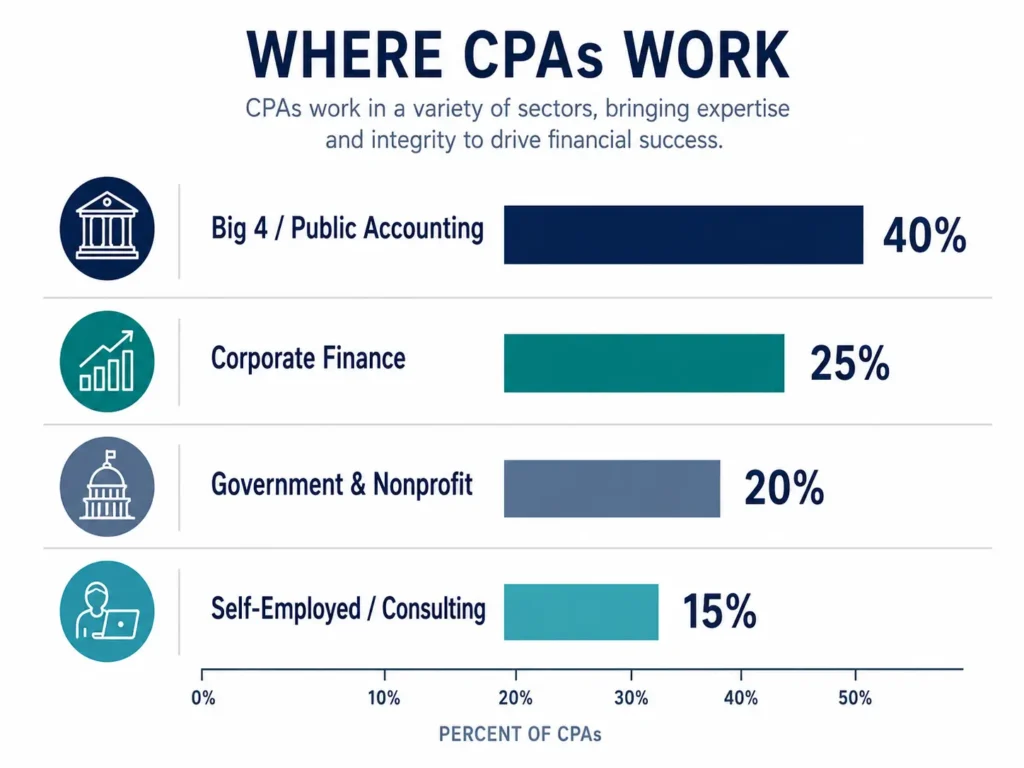
- Public accounting firms. A large share of licensed CPAs work at the Big 4 Deloitte, PwC, EY, and KPMG or at regional firms. These professionals have strong technical training and structured career tracks. Most move after three to seven years. Mid-career exits from public accounting are one of the most reliable sourcing channels in finance recruiting.
- Corporate finance and industry. CPAs in controller, FP&A, and accounting manager roles inside corporations are often stable but open to opportunities if those opportunities are presented directly and compellingly. They are rarely scanning job boards.
- Government and nonprofits. A significant share of CPAs work in public-sector audit, regulatory agencies, and nonprofit finance. According to the Bureau of Labor Statistics, accountants and auditors held about 1.6 million jobs in 2024, with government agencies and public accounting firms among the largest employers.
Why Standard Sourcing Doesn’t Work
Most CPAs don’t apply to job postings. They don’t need to. Demand outpaces supply by such a margin that qualified, credentialed professionals receive direct outreach before they’ve updated a resume.
A 2025 Bloomberg analysis of credentialed professional hiring found that CPA-required roles take an average of 73 days to fill, 41% longer than comparable positions without a credential requirement. The delay is not about the process. It is about the pipeline. Organizations that post and wait are competing in a pool that barely exists.
The number of people sitting for the CPA exam has fallen more than 30% since 2016. That pipeline contraction is structural, not cyclical.
How to Actually Reach Them
- Engage networks, not job boards. Professional associations, AICPA chapters, state CPA societies, and finance-specific LinkedIn communities hold concentrations of licensed professionals who are connected but not searching. Recruiters with existing relationships in these networks reach candidates that job postings never will.
- Time your outreach. CPAs are most reachable in the weeks following busy season, typically late April through June, and in the months after a firm’s annual promotion cycle. These are the natural inflection points when even satisfied professionals consider their options.
- Lead with trajectory, not title. Mid-career CPAs leaving public accounting want to know what the role builds toward. They evaluate growth path, technology, and team quality. Compensation comes after those conversations, not before.
The Bottom Line
The CPAs you need are not looking for you. They are six months from a transition, recently passed over for promotion, or quietly exploring after a long audit season.
Sourcing is not about finding who applies. It is about being there with the right conversation, at the right moment, before anyone else is.